
In today's flexible working model where employees work from home and the office, the ongoing challenges of creating the magical bond between team members can be elusive.
Moreover, it has become increasingly challenging, since we have been moving from the emphasis on social skills to technical and managerial skills. And as a result, the body of traditions and knowledge concerning the magic of teams have been lost.
Good teamwork is the ability to effectively collaborate with teammates, with the work, and with a common goal or purpose. According to the LinkedIn Learning 2020 Workplace Learning Report, collaboration skill is among the top five critical soft skills that organizations are hiring for and training for in 2020.
Based on world-renowned Patrick Lencioni's and Bruce Tuckman's work on team management, this uniquely blended team building presentation provides you with the much needed practical guidance on how to identify dysfunctional teams and put in place a process to build effective and collaborative teams in your organization.
|||||||||||||||||||||||||||||||||||||||||||||||||||||||||||||||||||||||||||||||||||||||||||||||||||||||||||||||||||||||||||||||||||||||||||||||||||||||
This training package includes:
1. Building Effective Teams training presentation (PowerPoint format)
2. Blue-Green Game (PowerPoint & Word formats) – FREE
|||||||||||||||||||||||||||||||||||||||||||||||||||||||||||||||||||||||||||||||||||||||||||||||||||||||||||||||||||||||||||||||||||||||||||||||||||||||
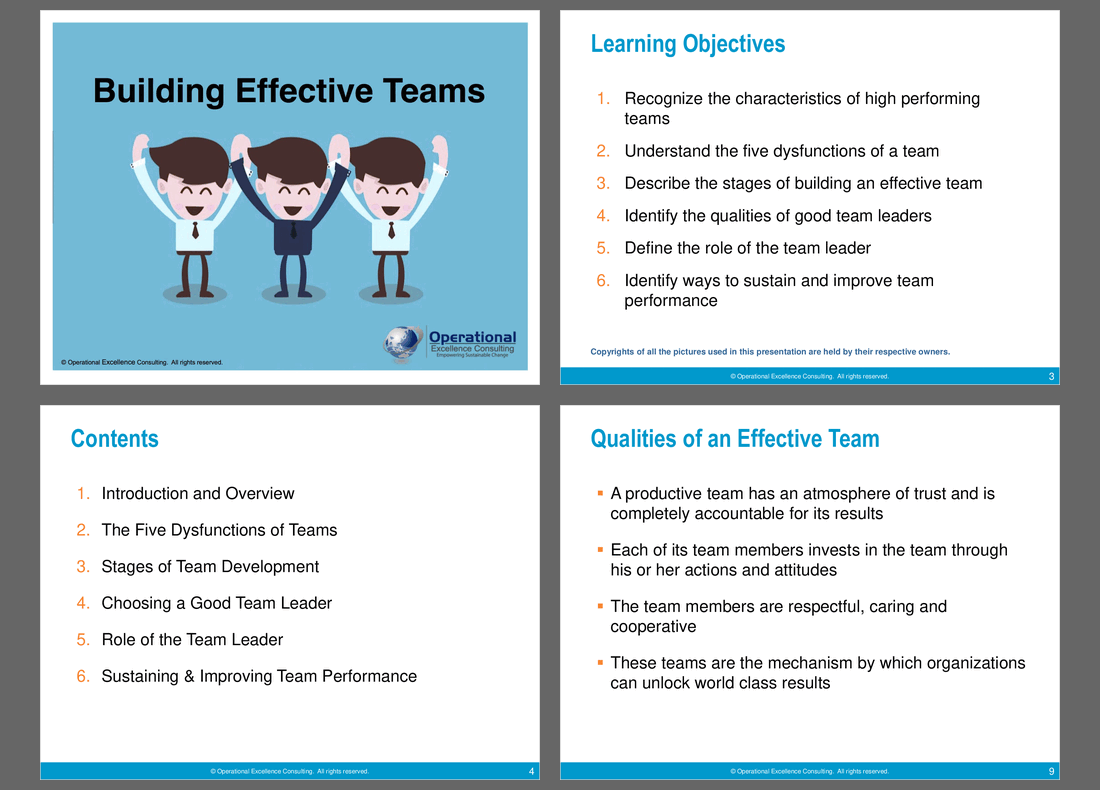
LEARNING OBJECTIVES
1. Recognize the characteristics of high performing teams.
2. Understand the five dysfunctions of a team.
3. Describe the stages of building an effective team.
4. Identify the qualities of good team leaders.
5. Define the role of the team leader.
6. Identify ways to sustain and improve team performance.
CONTENTS
1. Introduction and Overview
2. The Five Dysfunctions of Teams
3. Stages of Team Development
4. Choosing a Good Team Leader
5. Role of the Team Leader
6. Sustaining & Improving Team Performance
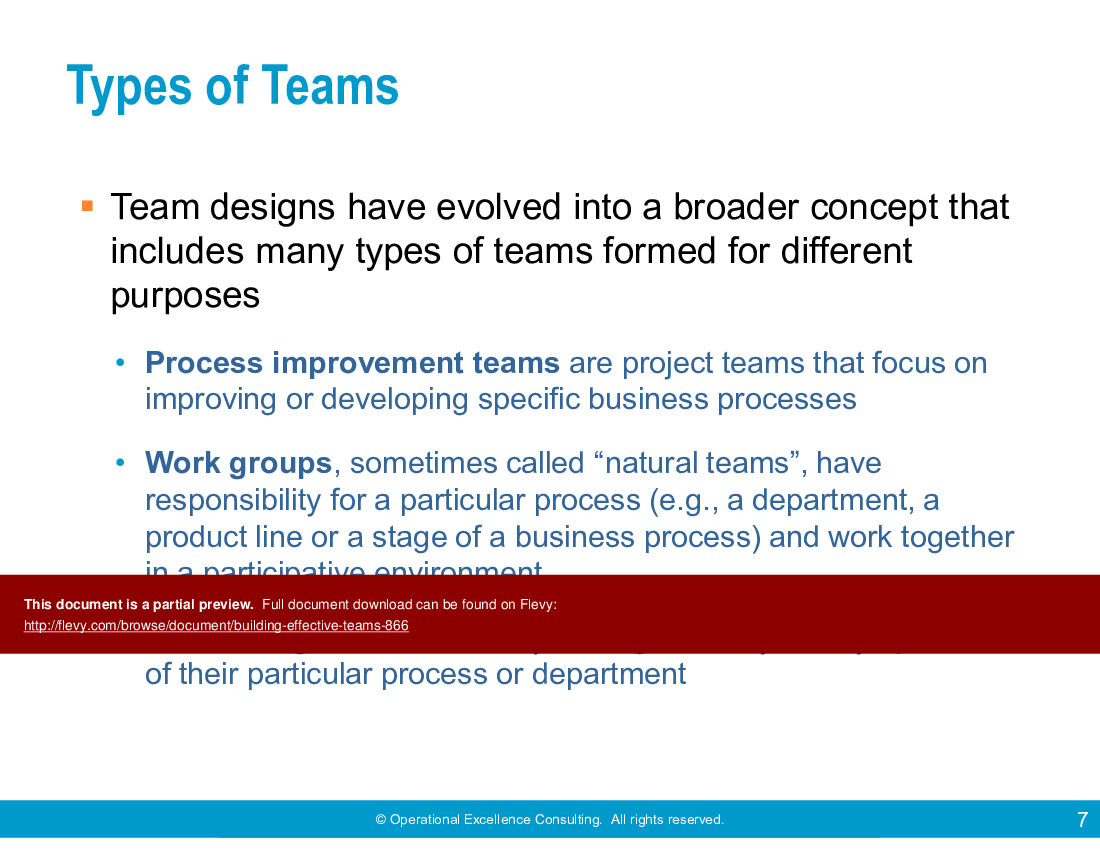
This document also delves into the various types of teams and their specific purposes within an organization. It highlights the importance of conflict management and accountability in driving team success.
Got a question about the product? Email us at support@flevy.com or ask the author directly by using the "Ask the Author a Question" form. If you cannot view the preview above this document description, go here to view the large preview instead.
Executive Summary
The "Building Effective Teams" presentation is a comprehensive training resource designed to enhance team dynamics and performance. Developed by Operational Excellence Consulting, this presentation provides actionable insights into the characteristics of high-performing teams, the 5 dysfunctions of teams, and the stages of team development. It equips leaders with the tools necessary to foster collaboration, accountability, and trust within their teams, ultimately driving organizational success. By utilizing this presentation, executives and team leaders will be able to identify dysfunctions, implement effective team-building strategies, and sustain high performance over time.
Who This Is For and When to Use
• Team leaders and managers seeking to improve team dynamics
• HR professionals involved in team development and training
• Organizational development consultants focusing on team effectiveness
• Executives aiming to enhance collaboration and productivity within teams
Best-fit moments to use this deck:
• During team-building workshops or retreats
• As part of leadership training programs
• When addressing team dysfunctions or performance issues
• In onboarding programs for new team leaders
Learning Objectives
• Recognize the characteristics of high-performing teams
• Understand the 5 dysfunctions of a team
• Describe the stages of building an effective team
• Identify the qualities of good team leaders
• Define the role of the team leader
• Identify ways to sustain and improve team performance
Table of Contents
• Introduction and Overview (page 1)
• The Five Dysfunctions of Teams (page 2)
• Stages of Team Development (page 3)
• Choosing a Good Team Leader (page 4)
• Role of the Team Leader (page 5)
• Sustaining & Improving Team Performance (page 6)
Primary Topics Covered
• Introduction to Teams - Defines a team as a group of individuals working interdependently towards a common goal.
• Five Dysfunctions of Teams - Discusses Patrick Lencioni's model highlighting absence of trust, fear of conflict, lack of commitment, avoidance of accountability, and inattention to results.
• Stages of Team Development - Outlines Tuckman’s model: Forming, Storming, Norming, and Performing, detailing characteristics and outcomes of each stage.
• Qualities of Effective Team Leaders - Identifies essential traits and skills that contribute to successful leadership within teams.
• Sustaining Team Performance - Provides strategies for maintaining high performance, including clear goals, empowerment, and recognition.
• Team Member Development - Discusses how to assess and support team members based on their profiles and needs.
Deliverables, Templates, and Tools
• Team assessment tools for evaluating performance and dynamics
• Frameworks for identifying and addressing team dysfunctions
• Guidelines for effective team leadership and management
• Templates for setting team goals and tracking progress
• Exercises for team-building and enhancing trust
Slide Highlights
• Overview of the Five Dysfunctions of Teams with visual representation
• Stages of Team Development illustrated with key characteristics
• Practical tips for managing teams effectively
• Quotes from leadership experts to reinforce key concepts
• Actionable strategies for overcoming common team challenges
Potential Workshop Agenda
Introduction to Team Dynamics (60 minutes)
• Overview of team concepts and importance
• Discussion on team roles and responsibilities
Understanding Team Dysfunctions (90 minutes)
• Deep dive into Lencioni’s Five Dysfunctions
• Group activities to identify dysfunctions within teams
Stages of Team Development (60 minutes)
• Exploration of Tuckman’s model
• Interactive session on navigating team stages
Leadership and Team Performance (90 minutes)
• Identifying qualities of effective leaders
• Strategies for sustaining high team performance
Customization Guidance
• Tailor the presentation to reflect specific organizational goals and team structures
• Modify case studies and examples to align with the audience's industry
• Adjust the duration and depth of sessions based on participant experience levels
• Incorporate company-specific terminology and frameworks for relevance
Secondary Topics Covered
• Importance of trust and communication in teams
• Conflict resolution strategies for teams
• Techniques for fostering collaboration and innovation
• Metrics for measuring team performance and successDocument FAQ
What are the 5 dysfunctions of a team?
The 5 dysfunctions include absence of trust, fear of conflict, lack of commitment, avoidance of accountability, and inattention to results.
How can I identify if my team is experiencing dysfunctions?
Look for signs such as decreased productivity, conflicts, unclear roles, and lack of engagement among team members.
What are the stages of team development?
The stages are Forming, Storming, Norming, and Performing, each representing different phases of team dynamics and maturity.
What qualities should a team leader possess?
Effective team leaders should have strong communication skills, a clear vision, the ability to inspire, and a commitment to team development.
How can I sustain high team performance?
Sustain performance by setting clear goals, empowering team members, fostering open communication, and recognizing achievements.
What tools can help improve team dynamics?
Utilize team assessment tools, feedback mechanisms, and structured team-building exercises to enhance collaboration and performance.
How do I address conflicts within my team?
Encourage open dialogue, establish ground rules for discussions, and facilitate conflict resolution through structured processes.
What role does trust play in team effectiveness?
Trust is foundational for effective teamwork, enabling open communication, collaboration, and a willingness to take risks.
Glossary
• Team - A group of individuals working interdependently towards a common goal.
• Dysfunction - A failure to function effectively within a team context.
• Trust - The reliance on the integrity and ability of team members.
• Conflict - A disagreement or clash between team members.
• Commitment - The dedication of team members to team goals and objectives.
• Accountability - The obligation of team members to take responsibility for their actions.
• Performance - The effectiveness of a team in achieving its goals.
• Leadership - The act of guiding and directing a group towards achieving objectives.
• Collaboration - Working together to achieve a common goal.
• Empowerment - Granting team members the authority and confidence to make decisions.
• Feedback - Information provided regarding performance or behavior.

• Development - The process of improving skills and capabilities within a team.

Source: Best Practices in Team Management PowerPoint Slides: Building Effective Teams PowerPoint (PPTX) Presentation Slide Deck, Operational Excellence Consulting
This document is available as part of the following discounted bundle(s):
Save %!
Team Excellence Toolkit
This bundle contains 2 total documents. See all the documents to the right.
|
Download our FREE Organization, Change, & Culture, Templates
Download our free compilation of 50+ slides and templates on Organizational Design, Change Management, and Corporate Culture. Methodologies include ADKAR, Burke-Litwin Change Model, McKinsey 7-S, Competing Values Framework, etc. |